When a Severe Headache Became a Life-Changing Warning
At 45, Mrs. Ritu Sharma was leading a busy and fulfilling life, balancing her professional responsibilities and family commitments. Apart from occasional headaches, she considered herself healthy.
One morning, she experienced the worst headache of her life.
The pain was sudden, intense, and unlike anything she had felt before. It was accompanied by nausea, dizziness, and temporary blurred vision. Concerned, her family rushed her to the hospital for immediate evaluation.
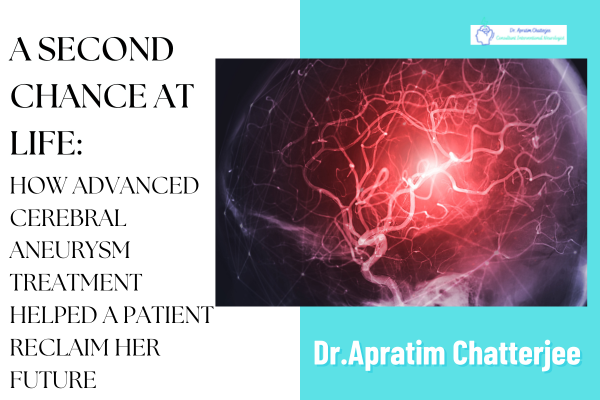
What initially seemed like a severe migraine turned out to be something far more serious—a Cerebral Aneurysm.
The diagnosis left Ritu and her family frightened and overwhelmed. Questions flooded their minds. Was it dangerous? Would she need surgery? Would she recover fully?
Seeking specialized care, they consulted Dr. Apratim Chatterjee, a renowned Interventional Neurologist known for his expertise in treating complex neurovascular conditions.
That decision would prove to be life-changing.
________________________________________
Understanding Cerebral Aneurysm
Following advanced brain imaging and neurovascular evaluation, Dr. Chatterjee carefully explained the diagnosis.
What is a Cerebral Aneurysm?
A Cerebral Aneurysm, also known as a Brain Aneurysm, occurs when a weakened area in a blood vessel wall within the brain bulges outward like a balloon.
While some aneurysms remain stable for years, others can rupture and cause life-threatening bleeding in the brain.
Common Risk Factors for Brain Aneurysm
• High blood pressure
• Smoking
• Family history of aneurysms
• Aging
• Certain genetic conditions
• Vascular abnormalities
Common Symptoms of Cerebral Aneurysm
Many aneurysms cause no symptoms until they enlarge or rupture. Possible warning signs include:
• Sudden severe headache
• Blurred or double vision
• Neck pain
• Nausea and vomiting
• Dizziness
• Facial numbness
• Difficulty speaking
• Seizures
Early diagnosis is crucial for preventing serious neurological complications.
________________________________________
The Emotional Impact of a Brain Aneurysm Diagnosis
For Ritu, the diagnosis was emotionally overwhelming.
She worried about:
• The possibility of rupture
• Permanent neurological damage
• Impact on her family
• Future independence
• Returning to her normal life
Even simple daily activities became a source of anxiety.
Like many patients facing neurovascular conditions, she needed both advanced medical treatment and emotional reassurance.
________________________________________
Expert Neurovascular Care with Dr. Apratim Chatterjee
During consultation, Dr. Chatterjee patiently explained the condition, treatment options, risks, and expected outcomes.
His calm and compassionate approach helped alleviate much of the family’s fear.
Rather than focusing only on the aneurysm itself, he emphasized a comprehensive treatment strategy designed to preserve brain function, minimize risk, and maximize recovery.
The personalized care plan gave Ritu confidence that she was in expert hands.
________________________________________
Advanced Treatment for Cerebral Aneurysm
Modern interventional neurology offers minimally invasive treatment options that can effectively manage many cerebral aneurysms.
Ritu’s Treatment Plan Included:
• Comprehensive neurological evaluation
• Advanced brain imaging
• Neurovascular risk assessment
• Minimally invasive endovascular intervention
• Blood pressure management
• Continuous neurological monitoring
• Rehabilitation guidance
• Long-term follow-up care
Using advanced neuro-interventional techniques, Dr. Chatterjee successfully treated the aneurysm while minimizing disruption to surrounding brain structures.
________________________________________
Why Early Detection of Brain Aneurysm Matters
Many cerebral aneurysms remain undiagnosed until complications occur.
Benefits of Early Diagnosis and Treatment
• Reduced risk of rupture
• Prevention of brain hemorrhage
• Better neurological outcomes
• Faster recovery
• Improved quality of life
• Reduced long-term complications
• Greater peace of mind
Timely intervention can be lifesaving and significantly improve long-term prognosis.
________________________________________
Recovery Journey: Rebuilding Confidence and Health
Recovery required patience, support, and careful follow-up.
In the weeks following treatment, Ritu gradually regained her confidence.
Her headaches resolved.
Her energy levels improved.
Most importantly, the fear that had initially accompanied the diagnosis began to fade.
With regular follow-ups and guidance from Dr. Chatterjee, she returned to her professional and personal responsibilities with renewed optimism.
Each milestone reinforced the fact that recovery was possible.
________________________________________
A New Beginning After Treatment
Today, Ritu is living a healthy, active, and fulfilling life.
She remains committed to maintaining her overall health and following preventive measures recommended by her neurologist.
Most importantly, she no longer lives under the shadow of uncertainty.
Her story is a powerful example of how early diagnosis, advanced neurovascular treatment, and expert medical care can help patients overcome even the most frightening neurological conditions.
Under the supervision of Dr. Apratim Chatterjee, what began as a medical emergency became a story of resilience, recovery, and hope.
________________________________________
Frequently Asked Questions (FAQs)
What is a cerebral aneurysm?
A cerebral aneurysm is a bulging or ballooning area in a blood vessel within the brain caused by weakness in the vessel wall.
Is a brain aneurysm dangerous?
Yes. If an aneurysm ruptures, it can cause bleeding in the brain and become a life-threatening emergency.
What are the warning signs of a cerebral aneurysm?
Symptoms may include sudden severe headache, vision changes, dizziness, nausea, facial weakness, and neurological symptoms.
Can cerebral aneurysms be treated without open surgery?
Many aneurysms can be treated using minimally invasive endovascular procedures performed by interventional neurologists.
Who is at risk for cerebral aneurysm?
Risk factors include high blood pressure, smoking, family history, aging, and certain vascular conditions.
When should I seek neurological evaluation?
Any sudden severe headache, unexplained neurological symptoms, or concerning brain imaging findings should be evaluated immediately.
________________________________________
Conclusion: Hope Through Advanced Neurovascular Care
A cerebral aneurysm diagnosis can be frightening, but modern neurological and neurovascular treatments have dramatically improved patient outcomes.
Under the expert supervision of Dr. Apratim Chatterjee, patients receive advanced, personalized care focused on early diagnosis, minimally invasive treatment, neurological preservation, and long-term wellness.
Ritu’s journey reminds us that even life-threatening neurological conditions can be successfully managed with timely intervention, expert guidance, and compassionate support.
With the right care, patients can move beyond fear, regain confidence, and embrace a healthier future.