
Introduction
Abnormal vascular growths and connections within the brain or surrounding structures can lead to serious neurological complications. One such condition involves Arteriovenous Growths (AVG) or Arteriovenous Malformations (AVMs)—abnormal tangles of arteries and veins that disrupt normal blood flow.
Interventional Neurologist Dr. Apratim Chatterjee specializes in treating these conditions using a minimally invasive, highly effective technique known as AVG Embolization.
What Is AVG Embolization?
AVG Embolization is a cutting-edge endovascular procedure used to:
block abnormal blood vessels
reduce blood flow within the malformation
prevent rupture and bleeding
stabilize neurological symptoms
Instead of open surgery, the entire treatment is performed through a microcatheter inserted into a blood vessel—making it safer and faster with minimal recovery time.
When Is AVG Embolization Needed?
Dr. Apratim Chatterjee recommends AVG Embolization for patients with:
✔ Arteriovenous Malformations (AVMs)
Tangled vessels that can burst and cause brain hemorrhage.
✔ Arteriovenous Fistulas (AVFs)
Abnormal direct connections between arteries and veins.
✔ Severe or recurrent nosebleeds linked to vascular abnormalities
In some cases, source vessels are intracranial or skull-base arteries.
✔ Risk of stroke or neurological damage
Due to high-pressure blood flow through abnormal channels.
✔ Pre-surgical or combined therapy
Embolization may be done before surgery to reduce bleeding risk.
How the Procedure Works
Dr. Chatterjee uses an advanced endovascular technique involving the following steps:
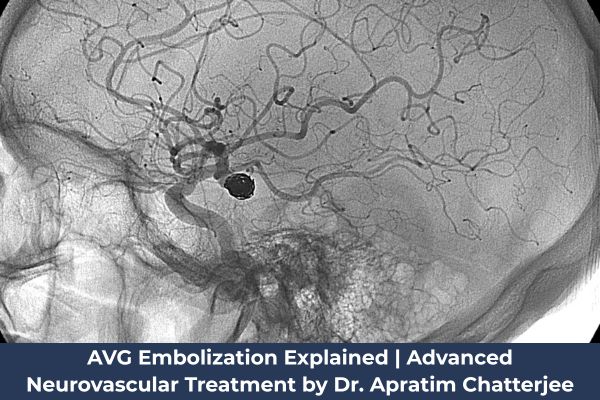
1. Diagnostic Angiography
A detailed imaging scan to locate the abnormal vessels.
2. Microcatheter Navigation
A thin catheter is guided through the arteries to reach the exact location of the AVG.
3. Embolization Material Delivery
Special materials like:
medical glue
coils
particles
liquid embolic agents
are used to seal the abnormal connections.
4. Immediate Blood Flow Correction
The moment the AVG is blocked, the pressure on surrounding vessels reduces, lowering the risk of rupture.
Benefits of AVG Embolization
✔ Minimally invasive
No open brain surgery required.
✔ Quick recovery
Most patients resume normal life within days.
✔ High success rate
Restores normal blood flow safely and effectively.
✔ Prevents life-threatening complications
Especially hemorrhage, stroke, or neurological deficits.
✔ Suitable for high-risk patients
Those who cannot undergo major surgery benefit greatly from embolization.
Why Choose an Interventional Neurologist Like Dr. Apratim Chatterjee?
AVG Embolization requires exceptional precision, understanding of complex vascular anatomy, and mastery of microcatheter-based navigation.
Dr. Apratim Chatterjee is known for:
expert diagnosis
advanced endovascular skills
safe procedural planning
successful outcomes with minimal complications
His expertise ensures patients receive world-class, evidence-based neurointerventional care.
Conclusion
AVG Embolization represents one of the most significant advancements in treating abnormal vascular connections in the brain and surrounding areas. It offers patients a safe, minimally invasive solution with excellent long-term results.
Under the skilled hands of experts like Dr. Apratim Chatterjee, patients with AVMs, AVFs, and other vascular abnormalities can look forward to restored health, reduced risk of complications, and improved quality of life.
If you or a loved one is experiencing symptoms related to abnormal vascular structures, early evaluation and treatment can be life-saving.
Modern interventional neurology provides hope—and healing—with precision and safety.