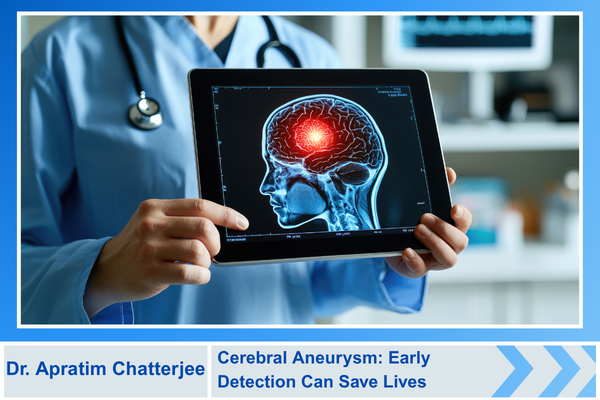
Cerebral Aneurysm: Early Detection Can Save Lives
Short Introduction
A Cerebral Aneurysm, also known as a brain aneurysm, is a potentially life-threatening condition that occurs when a weakened area in a blood vessel within the brain bulges outward. While some aneurysms remain small and symptom-free, others can grow larger and rupture, causing bleeding in the brain and leading to a medical emergency.
Advances in neuroimaging and minimally invasive neurovascular treatments have significantly improved the diagnosis and management of cerebral aneurysms. Early detection and timely treatment play a crucial role in preventing serious complications such as stroke, brain damage, and death.
Under the expert care of Dr. Apratim Chatterjee, patients receive comprehensive evaluation and advanced interventional treatment for cerebral aneurysms and other complex neurovascular disorders.
________________________________________
What is the Condition?
A cerebral aneurysm is a balloon-like bulge that develops in the wall of a blood vessel supplying the brain. It occurs when part of the artery wall becomes weak and begins to protrude outward.
Most aneurysms develop at branching points of arteries where blood flow places greater pressure on vessel walls.
Types of Cerebral Aneurysms
Saccular (Berry) Aneurysm
The most common type, appearing as a rounded sac attached to an artery.
Fusiform Aneurysm
Involves widening of the entire circumference of the blood vessel.
Dissecting Aneurysm
Occurs when a tear develops within the artery wall.
Risk Factors
• High blood pressure (hypertension)
• Smoking
• Family history of aneurysms
• Advancing age
• Excessive alcohol consumption
• Certain inherited connective tissue disorders
• Previous aneurysm history
Many cerebral aneurysms are discovered incidentally during imaging performed for unrelated reasons.
________________________________________
When Should You Seek Treatment?
An unruptured aneurysm may not cause symptoms. However, larger aneurysms may produce warning signs.
Symptoms of an Unruptured Cerebral Aneurysm
• Persistent headaches
• Pain above or behind the eye
• Blurred or double vision
• Drooping eyelid
• Facial numbness
• Difficulty concentrating
• Balance disturbances
Symptoms of a Ruptured Cerebral Aneurysm
A ruptured aneurysm is a medical emergency requiring immediate treatment.
Warning signs include:
• Sudden severe headache (“worst headache of life”)
• Nausea and vomiting
• Neck stiffness
• Sensitivity to light
• Loss of consciousness
• Seizures
• Confusion
• Weakness or paralysis
• Difficulty speaking
If any of these symptoms occur, seek emergency medical attention immediately.
________________________________________
Why is Treatment Recommended?
Treatment aims to prevent aneurysm rupture or manage complications if rupture has already occurred.
Benefits of Early Treatment
Prevention of Rupture
Treating an aneurysm before it ruptures significantly reduces the risk of life-threatening bleeding.
Stroke Prevention
Timely intervention can reduce the risk of stroke and neurological damage.
Minimally Invasive Options
Modern endovascular procedures often allow treatment without open brain surgery.
Improved Long-Term Outcomes
Early management improves survival rates and neurological recovery.
Reduced Risk of Recurrence
Advanced treatment techniques help secure the aneurysm and reduce future complications.
Treatment Options
Depending on the size, location, and characteristics of the aneurysm, treatment may include:
• Endovascular Coiling
• Flow Diverter Stenting
• Stent-Assisted Coiling
• Microsurgical Clipping
• Regular Monitoring for Selected Small Aneurysms
• Blood Pressure Management and Risk Factor Control
________________________________________
Risks and Complications
If a cerebral aneurysm remains untreated, serious complications may occur.
Potential Complications
• Aneurysm rupture
• Subarachnoid hemorrhage (bleeding around the brain)
• Stroke
• Brain swelling
• Hydrocephalus
• Seizures
• Permanent neurological disability
• Cognitive impairment
• Death
Risks of Treatment
While modern aneurysm treatments are highly effective, potential risks may include:
• Bleeding
• Blood vessel injury
• Stroke during the procedure
• Infection
• Reaction to contrast dye
• Recurrence requiring further treatment
A thorough evaluation helps determine the safest and most effective treatment approach.
________________________________________
Frequently Asked Questions (FAQ)
What causes a cerebral aneurysm?
Aneurysms develop when a section of a blood vessel wall becomes weakened. Factors such as hypertension, smoking, genetics, and aging can contribute to their formation.
Are all cerebral aneurysms dangerous?
Not all aneurysms rupture. Small aneurysms may remain stable for years. However, some aneurysms carry a higher risk and require treatment or close monitoring.
How is a cerebral aneurysm diagnosed?
Diagnosis is typically made using imaging studies such as CT Angiography (CTA), MR Angiography (MRA), or Digital Subtraction Angiography (DSA).
What is the difference between coiling and clipping?
Coiling is a minimally invasive endovascular procedure performed through blood vessels, while clipping is an open surgical procedure that places a clip across the aneurysm neck.
Can a cerebral aneurysm be cured?
Many aneurysms can be successfully treated and secured, significantly reducing the risk of rupture and future complications.
Is aneurysm treatment safe?
Yes. Advances in interventional neurology and neurovascular surgery have made aneurysm treatment safer and more effective than ever before.
Who is at higher risk of developing a cerebral aneurysm?
People with hypertension, smokers, individuals with a family history of aneurysms, and those with certain inherited disorders may have a higher risk.
________________________________________
About Dr. Apratim Chatterjee
Dr. Apratim Chatterjee
MBBS, MD (Medicine), DM (Neurology), FINR
Consultant Interventional Neurologist & Stroke Specialist
Dr. Apratim Chatterjee specializes in the diagnosis and treatment of complex neurological and neurovascular conditions, including cerebral aneurysms, stroke, vascular malformations, and cerebrovascular disorders. With expertise in advanced endovascular and minimally invasive interventions, he is dedicated to providing evidence-based, patient-centered care for optimal neurological outcomes.
________________________________________
Call to Action (CTA)
A cerebral aneurysm may remain silent until a serious complication occurs. Early diagnosis and timely intervention can significantly reduce the risk of rupture, stroke, and permanent neurological damage.
If you have been diagnosed with a cerebral aneurysm or are experiencing concerning neurological symptoms, schedule a consultation with Dr. Apratim Chatterjee today. Expert evaluation and advanced treatment can help protect your brain health and improve long-term outcomes.